12 Incredible Species On The Prague Zoo Animal List To Look Out For
12 Incredible Species On The Prague Zoo Animal List To Look Out For
Ever since I started travelling regularly back in 2018/2019, one of my little obsessions has been visiting zoos and wildlife parks wherever I go. And of all the ones I’ve visited so far, Prague Zoo is one of the best zoos in Europe that I’ve had the privilege of exploring.
I’ve actually visited Prague Zoo several times over the past few years (4 times and counting), and I’m sure anyone coming here for the first time won’t be disappointed.
There are two things that really make Prague Zoo stand out for me.
The first is its incredible location. Situated in the Troja district of Prague, the zoo is built across a steep, almost mountain-like hillside, with around 50 metres of elevation between its highest and lowest points. It makes exploring the zoo quite an experience in itself — although you should definitely come prepared for plenty of walking!
The second is, of course, the incredible variety of animals and birdlife you can find here.
There are plenty of familiar zoo favourites, but what has always impressed me most are some of the rarer and more unusual species.
- Tasmanian devils,
- Chinese pangolins,
- Przewalski’s horses,
- Sumatran orangutans and
- some incredibly rare parrots are just a few examples.
When you start looking through the Prague Zoo animal list, you soon realise this isn’t your average city zoo.
So, if you’re planning a visit to Prague Zoo in the Czech Republic, here are 12 incredible species that I think are particularly worth looking out for.
Prague Zoo Animal List: 12 Most Amazing Animals
| Animal | Why It’s Worth Seeing |
|---|---|
| Tasmanian Devil | The world’s largest surviving carnivorous marsupial |
| Chinese Pangolin | One of the world’s most unusual and heavily trafficked mammals |
| Lear’s Macaw | An extremely rare blue macaw from Brazil |
| Pesquet’s Parrot | A spectacular and unusual parrot from New Guinea |
| Western Lowland Gorilla | One of Prague Zoo’s star attractions |
| Polar Bear | A Prague Zoo favourite dating back decades |
| Sumatran Orangutan | Critically endangered great ape |
| Przewalski’s Horse | A species with an incredible connection to Prague Zoo |
| Common Wombat | One of the stars of the Darwin Crater exhibit |
| Gharial | One of the world’s most distinctive crocodilians |
| Shoebill | A bizarre-looking African wetland bird |
| Brazilian Merganser | One of the rarest ducks in the world |
Of course, with so many different species at Prague Zoo, narrowing this list down to just 12 wasn’t easy. Some I’ve chosen because of their rarity, others because of Prague Zoo’s conservation work, and a few simply because they are personal favourites from my visits here.
So, with that said, let’s start with an animal I’ve spent quite a bit of time trying to spot…
1. Tasmanian Devil
This is one of my personal favourite animals to see at Prague Zoo — the Tasmanian devil.
I have to admit, though, over my four visits here they have caused me a bit of bother! I’m sure many people have experienced the same thing. You get to their enclosure and, a lot of the time, they are nowhere to be seen.
I’m certain I’ve been to Prague Zoo at least once and not seen them at all. Whenever I’m here, I always find myself coming back to their enclosure to see if they’ve finally decided to make an appearance.
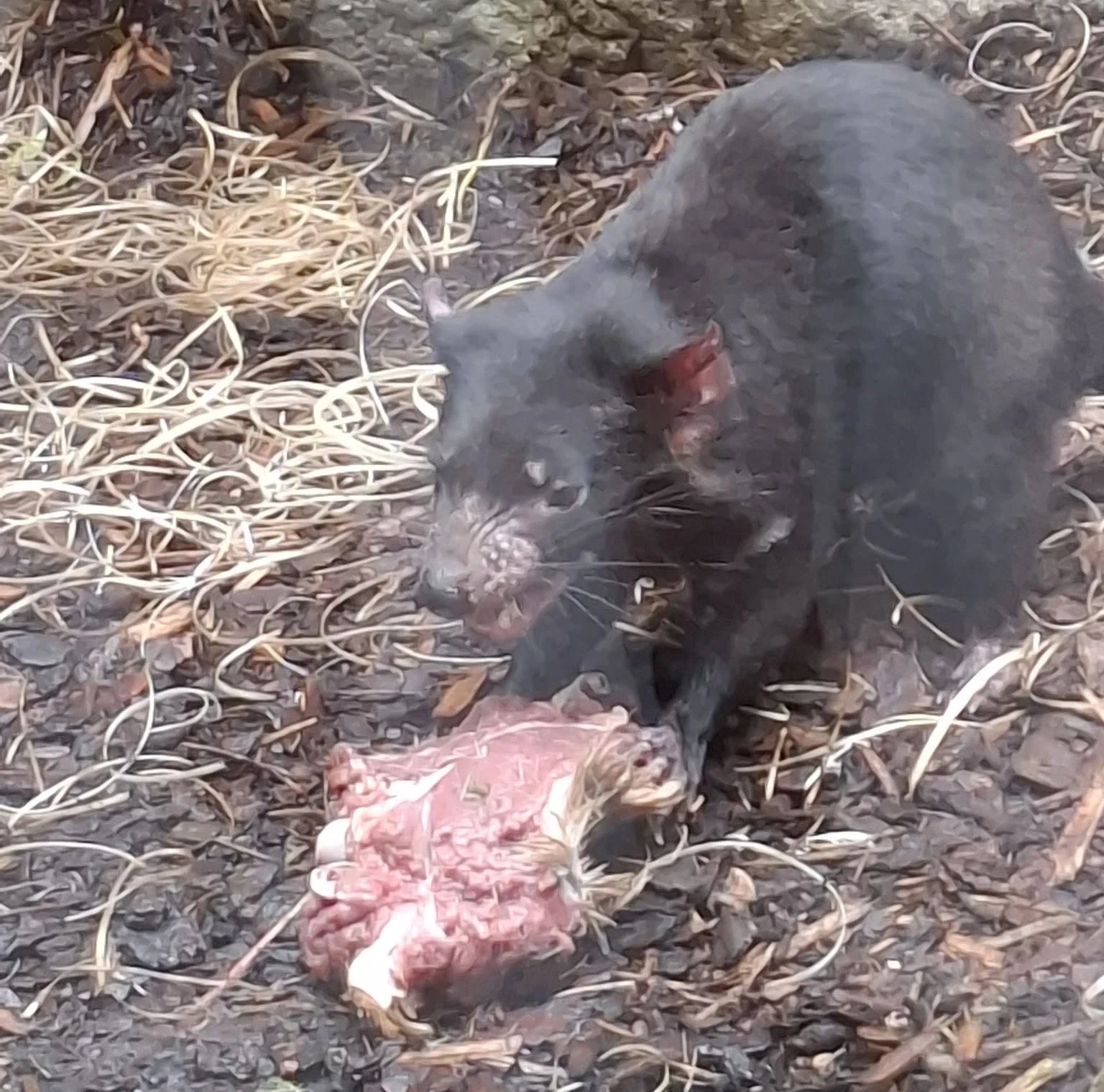
I think they are quite shy animals, but if you time it right and arrive around feeding time, there’s a much better chance they’ll be out looking for food.
You won’t see them hiding then. You’ll see them spinning around and blowing raspberries instead! (Little joke there — sorry, couldn’t resist.)
In the wild, Tasmanian devils are naturally found in Tasmania. However, in recent years, disease-free devils have also been reintroduced to mainland Australia at Barrington Wildlife Sanctuary as part of conservation efforts to establish a population outside Tasmania.
Conservation is also an important part of the reason Tasmanian devils are kept at Prague Zoo. Maintaining healthy populations in zoos can help provide an important safeguard for a species that has been badly affected by devil facial tumour disease (DFTD) and faces other threats in the wild.
At Prague Zoo, the Tasmanian devils can be found in Darwin Crater, an Australian and Tasmanian-themed area that is also home to wombats, kangaroos, echidnas and several other species.
Tasmanian Devils are the world’s largest living carnivorous marsupials and are currently classified as endangered.
For me, this is exactly the sort of animal that makes Prague stand out from many other zoos in Europe. I’m sure plenty of other visitors will agree — the Tasmanian Devil certainly isn’t an animal you get the opportunity to see every day.
2. Chinese Pangolin
I remember when I was maybe five or six years old, I had one of the old PG Tips Tea card albums. I had every card and somehow managed to memorise every animal in order. I certainly couldn’t name them all now (lol), but one animal that always stuck out to me was the Pangolin.
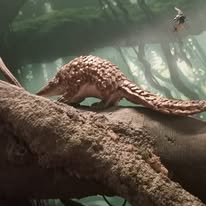
So, getting the opportunity to see a Chinese Pangolin in real life many years later was quite special.
I’ve found these can also be quite tricky to see at Prague Zoo. I haven’t seen them on every visit, but I was fortunate enough to see one of the babies during one visit. It wasn’t the first pup that was born – I visited the zoo after but never I see it but luckily the next year I did see the next pup that was born the following year.
Prague Zoo has now had two successful Chinese Pangolin births – the first in 2023 and another the following year after in 2024.
The first Pangopup to be born in 2023 was particularly significant because it was the first Chinese pangolin successfully born and raised in Europe.
This makes seeing a Chinese Pangolin a pretty unique experience for European zoo-goers. Prague and Leipzig are currently among the very few zoos in Europe where you can see the species. Although, Vienna Zoo is also preparing to keep Chinese Pangolins as well.
But what exactly makes these animals so unusual?
Pangolins are extraordinary mammals covered in protective keratin scales — the same protein found in our fingernails and hair. When threatened, they can curl themselves into a tight ball, using their scales almost like a suit of armour.
Unfortunately, that armour hasn’t been enough to protect them from humans.
Pangolins have been heavily targeted by illegal wildlife trafficking, particularly for their scales and meat, and the Chinese pangolin is now classified as critically endangered.
Prague Zoo received its first pair of Chinese Pangolins in 2022, and its subsequent breeding success has made the zoo an important European centre for the species.
For visitors, though, there is something much simpler that makes them special. They are such strange and unusual-looking animals that seeing one in person — particularly a Baby Pangolin — is something you’re unlikely to forget.
For me, that makes the Chinese pangolin one of the most fascinating animals on the entire Prague Zoo animal list.
3. Lear’s Macaw
I think it was in one of my old wildlife books when I was young that I first saw these birds. Out of all the large macaws, for me, these were always one of my favourites.
Back then, I simply called them “Blue Macaws“, not actually knowing their real name. I suppose as a child I didn’t give much thought to the fact that there were other, more familiar blue-coloured macaws, such as the blue-and-yellow macaw (Ara ararauna).
But, for whatever reason, it was these completely blue macaws that always stuck in my mind.
So much so that many years later, on one visit to Prague Zoo, it was quite a nice surprise to discover that I could actually see these birds here.
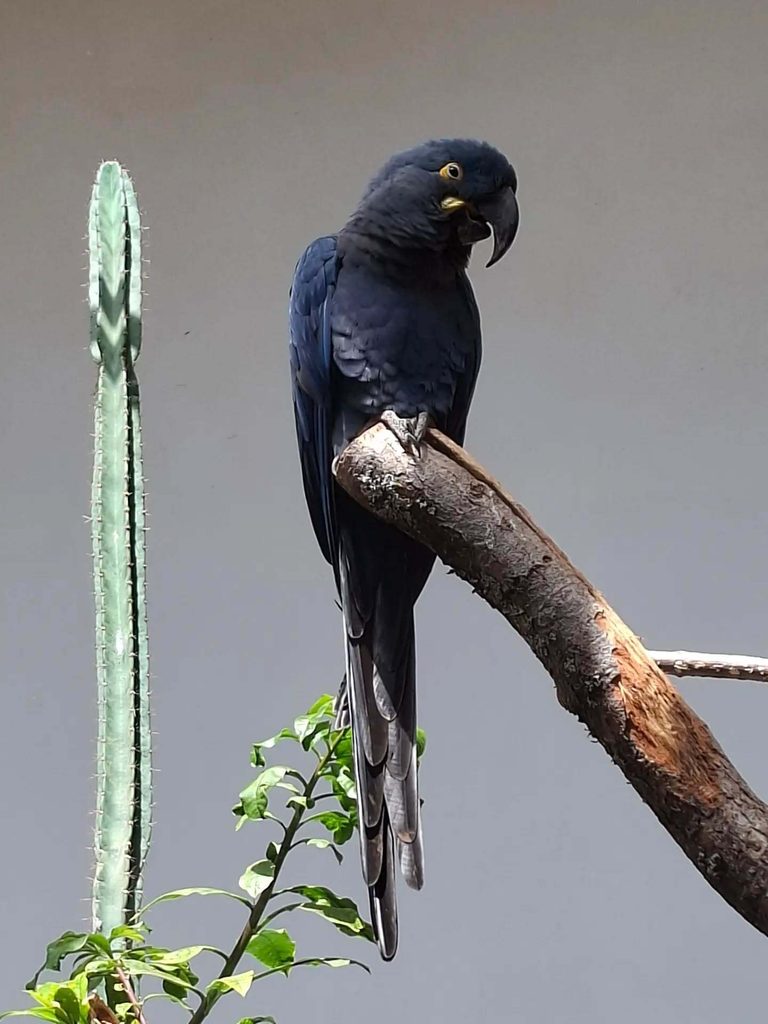
For anyone unfamiliar with them, the brilliantly coloured Lear’s macaw (Anodorhynchus leari) is a rare species of parrot native to a relatively small area of north-eastern Brazil.
Their incredible deep-blue plumage makes them difficult to miss, but unfortunately, their beauty and rarity also come with quite a conservation story.
Lear’s macaws were once considered among the rarest parrots in the world. Their wild population has suffered from habitat loss, trapping for the illegal bird trade and the loss of important food sources.
Thankfully, conservation efforts have helped their numbers recover considerably from their historic lows, although the species still today remains threatened.
At Prague Zoo, you’ll find Lear’s macaws in Rákos’ House, which is home to an impressive collection of rare and endangered parrots.
Even if you’re not normally much of a birdwatcher, I’d definitely recommend taking some time to explore this part of the zoo.
The Lear’s macaw was certainly one of the birds I was most excited to see here.
But actually, Lear’s macaws aren’t the only rare parrots you can find at Prague Zoo.
Another bird here that caught my attention for a completely different reason — has to be one of the strangest-looking parrots I’ve ever seen.
4. Pesquet’s Parrot
Another parrot I would definitely recommend looking out for at Prague Zoo is the bizarre-looking black and red Pesquet’s parrot.
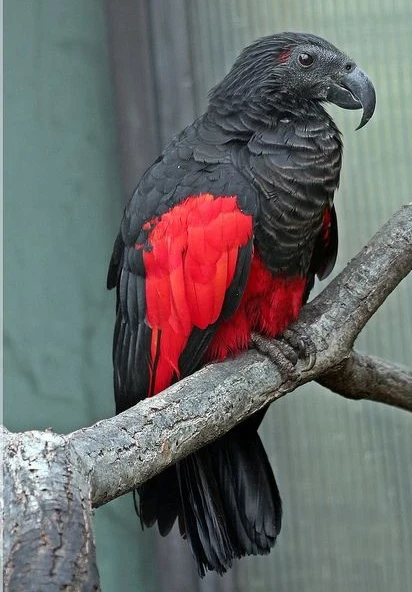
Sometimes nicknamed the “Dracula parrot” because of its striking black and scarlet colouring, this unusual species comes from the mountain rainforests of New Guinea.
It looks completely different from the brightly coloured parrots most of us are accustomed to seeing. In fact, I didn’t even know these parrots existed until I saw them at Prague Zoo.
I suppose part of the reason is that they don’t really look like you’d expect a parrot to look. With their dark feathers, bright red underparts and almost vulture-like head, they have a rather unusual appearance compared to other species of Parrots.
This is actually one of the things that makes the Pesquet’s Parrot so interesting.
Unlike most parrots, its diet consists largely of fruit, particularly figs, and its unusual-looking head is thought to be an adaptation to this way of feeding. The relatively bare facial area helps prevent fruit pulp from sticking to its feathers.
Prague Zoo also has a particularly interesting history with this species.
In 2020, it became the first zoo in continental Europe to successfully breed a Pesquet’s parrot, making this another species where Prague Zoo has achieved an important breeding milestone.
Pesquet’s Parrots are rarely kept in European zoos, so this is another excellent reason to spend some time exploring Prague Zoo’s magnificent bird collection.
For me, it was also one of those unexpected discoveries that makes visiting a zoo like this so enjoyable. I went there already excited about seeing the Lear’s macaws, but came away fascinated by a parrot I’d never even heard of before.
5. Western Lowland Gorilla
The western lowland gorillas are undoubtedly among Prague Zoo’s biggest stars.
You can find the main family group inside the impressive Dja Reserve, the largest pavilion ever constructed at Prague Zoo.
I actually remember my 1st ever visit to this zoo in 2023 and seeing the fund raiser for the new Gorilla enclosure. This was built purposely at one of the higher elevation points due to the potential danger of another serious flood.
The 2002 flood sadly cost the life of one of the young Gorillas at Prague Zoo (Pong) and an Important part about the construction of the new enclosure was to keep the Gorillas safe in the event of a similar Incident.
To get up to the Dja Reserve it’s quite a walk uphill but if you are feeling lazy you can get the cable car up. A bit scary – if you have a thing about heights, but once you get up here and see the Gorilla’s they are such amazing animals and well worth the trouble.
Prague Zoo has had Gorillas since 1963 and you can also visit the smaller Méfou Centre Group in the lower part of the zoo where 3 other male Gorillas are kept – something purposely done to prevent Inbreeding amongst the group.
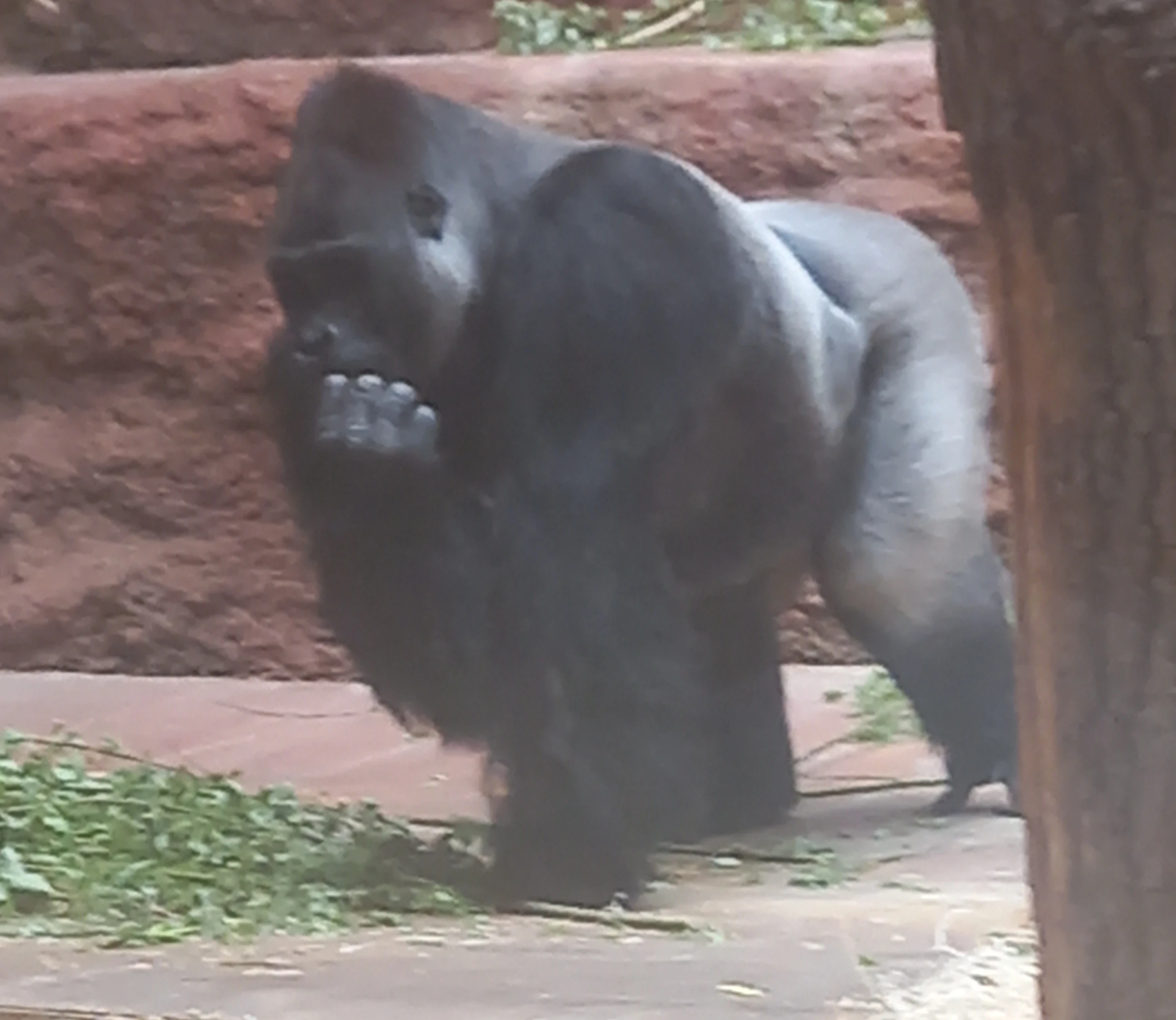
The exhibit has been designed around the forests of Central Africa and gives the gorillas access to both indoor and outdoor areas.
Currently, (at time of writing) there are 11 Gorillas at Prague Zoo – the dominant Silverback Kisamu, with females females Duni, Shinda, Kijivu, Kamba, and their offspring Mobi and Gaia in the Dja group – and the Mefou group of Richard with his two sons, Kiburi and Nur.
I would say you can’t come to Prague Zoo without a visit to the Dja Reserve. These animals they are just so Intelligent, and Prague Zoo offers a very unique opportunity to come and see them unlike any other European zoos you will visit.
6. Polar Bear
I’ve actually seen Polar Bears at quite a few of the zoos I’ve visited over the years now. On one of my European trips a few years back, I saw these animals at Budapest first, then Vienna and finally Prague – all in the space of less than a week.
Since this time Budapest Zoo no longer keeps polar bears, but I was fortunate enough to see them here when they did.
At Prague Zoo, I’ve always found the Polar Bears surprisingly difficult to spot on my last couple of trips. In fact, I think I’ve actually had better luck spotting the Tasmanian Devils!
On my last visit, I only just managed to spot one peering over the fence. I don’t know why I’ve had such bad luck with them here, but when you do finally get a good view, Polar Bears are always incredible animals to see.
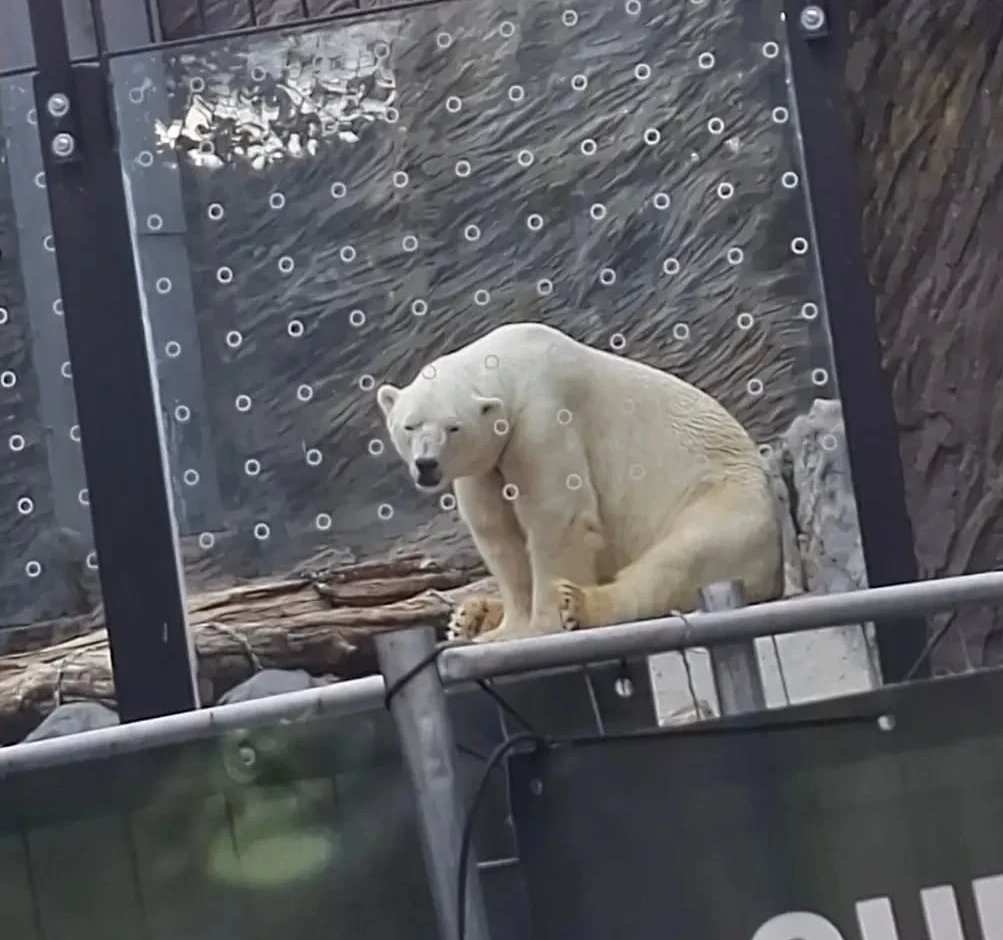
Of course, Polar Bears aren’t one of the animals that make Prague Zoo particularly unique. You’ll find them at several other zoos in Europe, but in my opinion, you can’t really make a list of the best animals at Prague Zoo without mentioning them.
Polar Bears have been kept here since the 1930s, making them a long-standing part of Prague Zoo’s history.
And if you’re luckier than me, you may get a much better view!
One of the great things about seeing Polar Bears is watching them swim underwater. If you think just seeing them is cool wait till you see one moving through the water up close. You might never realise just how enormous and powerful these animals are till you see this.
Prague Zoo is actually making this an even bigger part of the experience in the near future. The zoo is developing a new Arctic exhibit, which is planned to provide the Polar Bears with a much larger modern habitat that will give visitors impressive underwater views like never before.
Budapest Zoo used to offer a similar underwater viewing experience. I was sad to see the Polar Bears disappear from there, but for sure I will be particularly looking forward to seeing what Prague Zoo does with its new Arctic exhibit once it’s completed.
Hopefully, on my next visit, when this is built – I won’t have to settle for seeing the top of a polar bear’s head over a fence for a change!
7. Sumatran Orangutan
Quite similar to the Polar Bears situation at Prague Zoo is another animal that isn’t necessarily unique to this zoo — but still always amazing to see. The first time I see Sumatran Orangutans was at Monkey World in Dorset UK. Since then I have had the privilege to see them at several other Zoos and at Prague each time I have been here.
I’ve also seen Orangutans at Budapest, Bratislava and Vienna, but they’re one of those animals I never get tired of seeing. There’s something about watching Orangutans climbing, interacting with each other and generally going about their day that makes them incredibly fascinating animals to observe.
At Prague Zoo, you’ll find the Sumatran Orangutans inside the Indonesian Jungle, one of the zoo’s major indoor pavilions.
Sumatran Orangutans are critically endangered in the wild, with habitat loss and fragmentation among the major threats facing the species.
Prague Zoo also has a long history with Orangutans stretching back more than six decades. Its first Orangutan arrived in 1961, while Kama, born in 1971, became the first Orangutan successfully raised in Czechoslovakia.
Today, the Indonesian Jungle remains one of the areas I would definitely recommend including on any route around Prague Zoo. As well as the Orangutans themselves, there are plenty of other interesting animals to look out for here.
One of my favourites is the pig-tailed macaque.
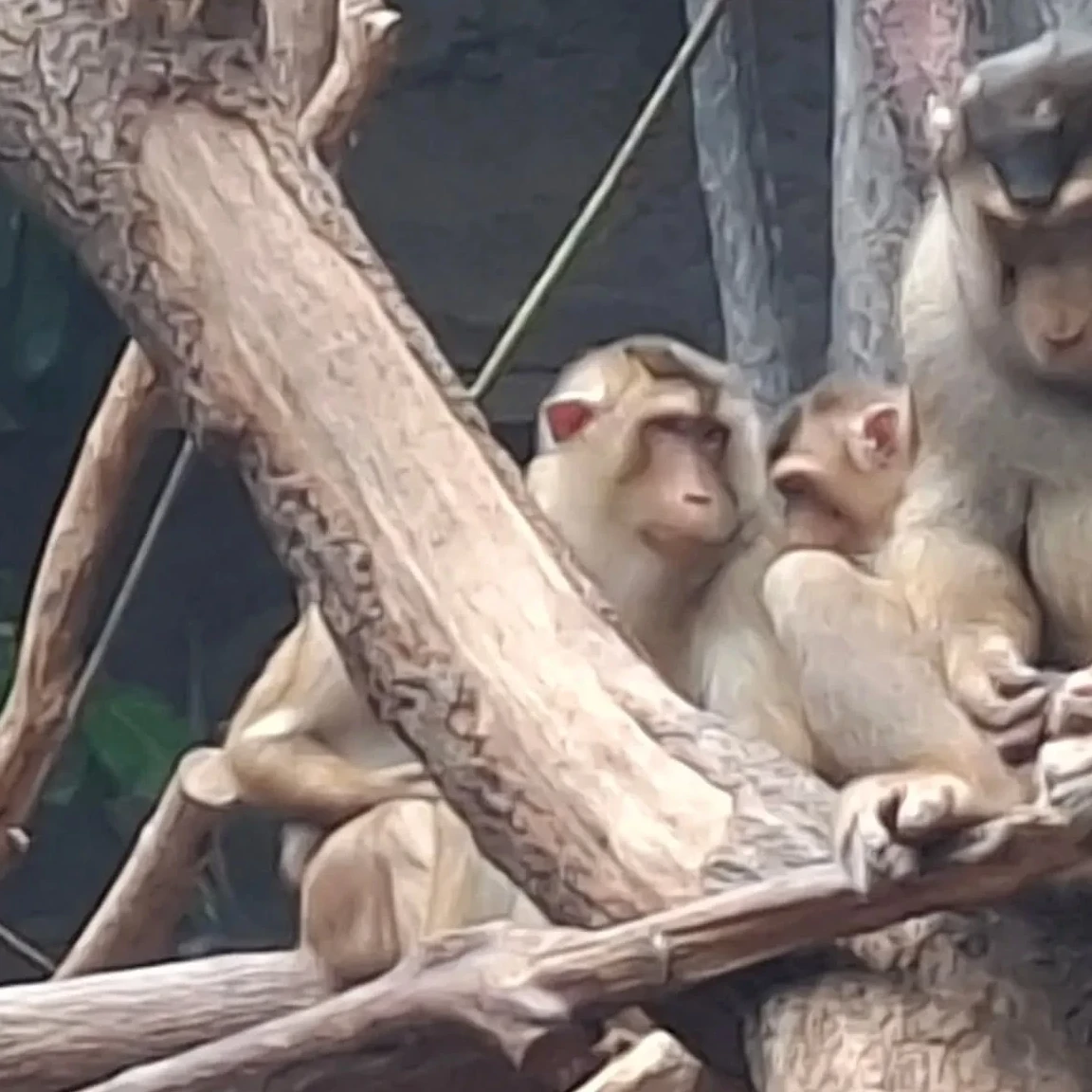
If you like monkeys, these are particularly cool to see because there isn’t the usual wall of glass separating you from them. Instead, you can get a surprisingly close and unobstructed view as they move around their enclosure.
For me, this makes the Indonesian Jungle about much more than just seeing the Orangutans. Between the critically endangered Sumatran Orangutans, the Macaques and the tropical surroundings, it’s easily one of the parts of Prague Zoo I’d recommend taking your time to explore.
8. Przewalski’s Horse
Mongolia is actually somewhere I’d love to visit one day. It’s one of those places that has always made me curious — such a vast and unique part of the world with landscapes and wildlife quite unlike anywhere I’ve travelled before.
I didn’t know a lot about the Przewalski’s Horse before I came to Prague Zoo and learned more about them, but this was something that definitely deepened my interest in Mongolia.
In fact, one thing you’ll quickly learn at Prague Zoo is that the Przewalski’s Horse is perhaps one of the most incredible and important animals here from a conservation perspective.
These remarkable horses once disappeared completely from the wild, surviving only because animals remained in captivity.
Prague Zoo has been involved in their conservation for decades and has held the international studbook for the species since 1960. This means the zoo has played an important role in coordinating information about the captive population and supporting the long-term survival of the species.
But Prague Zoo’s involvement goes much further than keeping and breeding the horses.
Through its Return of the Wild Horses project, Prague Zoo has helped transport Przewalski’s horses back to Mongolia, where they have been released into their natural habitat.
More recently, the zoo has also been involved in returning the species to the wild in Kazakhstan.
This is what makes seeing Przewalski’s horses at Prague Zoo particularly special.
You’re not simply looking at another animal in a zoo enclosure. You’re looking at a species that once disappeared from the wild altogether and has since been successfully returned to parts of its former range.
For me, it’s one of the best examples at Prague Zoo of what successful captive breeding, international cooperation and wildlife reintroduction programmes can actually achieve.
And who knows?
Maybe one day me and Teddy will finally make that trip to Mongolia and get the chance to see Przewalski’s horses where they really belong — out in the wild.
9. Common Wombat
Back to the Darwin Crater now, and just like their neighbours at Prague Zoo — the Tasmanian Devils — I’ve found the common wombat to be another surprisingly difficult animal to spot here.
In fact, I can’t even remember whether I’ve successfully seen one at either Prague or Budapest Zoo! I think I might have at Budapest but I don’t think I have.
So much for being “common”.
Still, they are definitely an interesting addition to Prague Zoo.
Wombats aren’t actually that common in European zoos at all, with only a small number of zoos across Europe keeping them – so coming here for this reason is a good one.
Note: If you do want to see them that badly. Same with the Tasmanian Devils, or actually any elusive animal at the Zoo – ask a member of staff what time they are being fed and chances are they will not be hiding away when there is food.
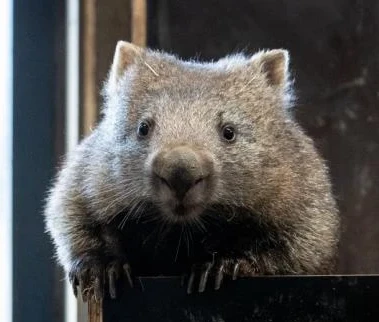
Wombats are of course Australian marsupials, but what you might not know is that they are close relatives of Koala Bears.
Also, strange but true fact about Wombats (Not sure why I’m adding this in here) they really do produce cube-shaped poo.
The reason for this – it’s quite practical really. Wombats use their droppings to mark their territory, and the unusual cube shape means they’re less likely to roll away.
It’s gross (I know) but definitely quite an Interesting fact if you never knew it – I will let you decide if this is something you want to keep an eye out for on future visits to the Zoo.
Anyway, moving swiftly on from wombat poo…
Prague Zoo has kept Common Wombats since 2021, and there are currently three here: Cooper, the male; Winkleigh, the female; and their offspring Mersey, who was born in September 2024.
Mersey was the first wombat born in the Czech Republic, adding yet another breeding success to Prague Zoo’s growing list.
10. Gharial
Confession time. Until researching this post, I wasn’t really familiar with this animal at all. The only crocodilians I knew much about were crocodiles, alligators and caimans.
Perhaps I’ve even seen Gharials before and just assumed they were crocodiles or maybe Alligators, but there is a difference if you know what to look for.
At first glance, a Gharial looks a little like someone has taken a crocodile and stretched its snout!
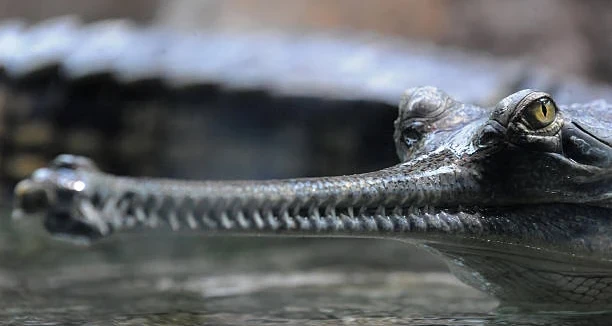
These extraordinary reptiles are characterised by their extremely long, narrow jaws, which immediately distinguish them from most crocodiles and alligators. Their unusual snouts are perfectly adapted for catching fish, which make up the majority of their diet.
Gharials are native to the river systems of the Indian subcontinent. Unfortunately, they are among the most endangered crocodilians in the world. Their populations have suffered dramatically as a result of habitat loss, changes to river systems, fishing and other human pressures.
This makes Prague Zoo’s Chambal Gharial House particularly interesting.
Rather than simply having a couple of Gharials tucked away somewhere in the reptile collection, Prague Zoo has an entire pavilion dedicated to recreating part of their natural river habitat.
Plus, alongside the Gharials, you’ll also find fish and several interesting species of turtle, making this another area of the zoo that’s worth taking some time to explore.
For me, the Gharial is another good example of what I particularly like about Prague Zoo. Some of its most interesting animals aren’t necessarily the obvious ones you arrive expecting to see.
In this case, I’ve actually learned about an entirely new type of crocodilian just from researching what I’d seen at the zoo.
So, next time I visit, I’ll certainly know I’m not just looking at a funny-looking crocodile!
11. Shoebill
The Shoebill must surely be a contender for one of the strangest-looking birds on Earth. I’m actually in awe just finding out about these – honest truth – I can’t remember seeing these at Prague Zoo but now I really want to go back so I can see one.
The whole living dinosaur part and the fact it is the only living animal with Rex on the end of its name (Balaeniceps rex) particularly Interests me – I mean this bird is pretty awesome. I find Pelicans are pretty cool but these birds are like something else.
Native to the wetlands of tropical East Africa, these enormous birds get their name from the massive shoe-shaped bill protruding from the front of their face.
They can look almost prehistoric when you see one standing motionless.
Shoebills are only kept by a relatively small number of zoos around the world, but you can find them in Prague Zoo’s Bird Wetlands area.
I will definitely, be keeping a look out next time I’m here. I don’t know how they’ve actually escaped my attention. I’m sure other people will feel the same too – even if birds aren’t normally at the top of your zoo wish list, this is one to definitely keep an eye out for.
The Hornbill, is like bird you never knew you wanted to see but once you have I’m sure they will leave you wanting to see them each and every time you visit Prague Zoo.
12. Brazilian Merganser
Finally, we have what may initially look like one of the least spectacular animals on this list.
But before you click away – don’t underestimate the Brazilian merganser.
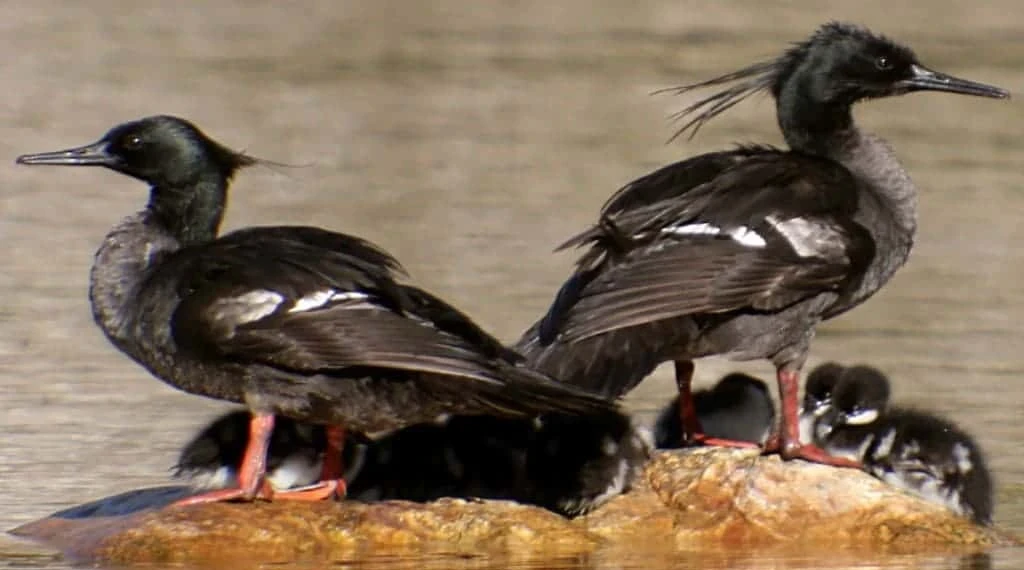
This is one of the rarest ducks on the planet.
Fewer than 250 are believed to remain in the wild, and the species was at one point thought to have become extinct.
Prague Zoo received five pairs in 2023 as part of efforts to establish a backup population outside Brazil.
Then, in 2025, something remarkable happened.
Prague Zoo successfully bred Brazilian mergansers, becoming the first zoo outside their native South American range to do so.
You can see them in the Bird Wetlands section of the zoo.
It might not have the imposing presence of a Gorilla or Polar Bear, but from a conservation perspective, the Brazilian Merganser is arguably one of the most extraordinary animals you can see here.
Visiting Prague Zoo With a Prague Visitor Pass
If you’re planning to visit Prague Zoo as part of a longer city break, another option worth considering is the Prague Visitor Pass.
I’ve used city passes on quite a few of my travels, and they can be a good way to save money if you’re planning to visit several paid attractions during the same trip.
The big advantage here is that Prague Zoo is included with the Prague Visitor Pass, so you don’t need to purchase a separate zoo admission ticket.
Even better, the pass also includes unlimited public transport around Prague, which you can use to make your way out to the zoo in Troja. This includes Prague’s metro, trams and buses, so it can make getting around the city considerably easier.
But obviously, I wouldn’t recommend buying the pass just for Prague Zoo.
Where it potentially becomes good value is if you’re also planning to visit several other Prague attractions.
Depending on the pass you choose, there are more than 70 included experiences, with attractions such as;
- Prague Castle,
- the Old Town Hall
- The Astronomical Clock,
- Petřín Lookout Tower,
- The Jewish Quarter and
- Various river cruises among the options.
The Prague Visitor Pass is available for 48, 72 or 120 hours, so whether it’s worth buying really depends on how much sightseeing you’re planning to do during your stay.
If you’re visiting Prague Zoo alongside several of Prague’s other major attractions, you can check the latest Prague Visitor Pass prices and what’s currently included below.
👉 [Check Prague Visitor Pass Prices & Availability on GetYourGuide]
*Affiliate disclosure: If you book through my link, I may earn a small commission at no additional cost to you.
*Or if you are only interested in visiting the zoo? You can also [check Prague Zoo ticket prices here].
Is Prague Zoo the Best Zoo in Europe?
Calling anywhere the best zoo in Europe is always going to be subjective. Even for me I am probably a bit conflicted between Budapest, Vienna and here. I mean I’d probably have to say Prague has a bit more here but honestly, I like these different zoos for different things.
What makes a great zoo will depend on what you’re most interested in seeing. For Instance, if you want to see Pandas go to Vienna but if you want to see Gorillas then come to Prague.
Although, Prague Zoo certainly has a strong case for being considered among the best European zoos I’ve visited.
For me, one of its biggest strengths is the variety.
You have huge animals such as polar bears and gorillas alongside genuinely unusual species such as pangolins, Tasmanian devils, gharials and some exceptionally rare birds.
There’s also a major conservation story behind many of the animals.
Prague Zoo has been involved in everything from returning Przewalski’s horses to the wild to breeding endangered species that very few other zoos have successfully kept.
And then there’s the zoo itself.
Built across a huge, hilly site in Prague’s Troja district, there is a lot to explore, so I would recommend allowing the best part of a day if you really want to see everything.
How To Get To Prague Zoo by Public Transport?
If you’re wondering how to get to Prague Zoo, you’ll find it in the Troja district on the northern side of the city.
The address is:
U Trojského zámku 120/3, 171 00 Praha 7, Czech Republic
For most visitors staying in central Prague, public transport is probably the easiest way to get there.
One of the simplest routes is to take Metro Line C to Nádraží Holešovice and then catch the 112 bus towards Prague Zoo.
Alternatively, depending on where you’re staying, you can reach Nádraží Holešovice by tram or bus and then change onto the 112 for the final part of the journey.
Just, one piece of advice – from my own personal experience — make sure you get off at the right stop!
I’ve made this mistake more than once in Prague and ended up relying on Google Maps to work out where I was and how to get where I was going.
It’s really not something you want to get stuck doing on your way to the zoo.
Prague Zoo isn’t right in the city centre, so getting off at the wrong bus or tram stop can leave you with an unnecessarily awkward journey. Just keep an eye on the stops and make sure you’re heading in the right direction.
Combine Prague Zoo With Prague Castle
Another little tip if you’re planning a full day of sightseeing is to combine your visit to Prague Zoo with Prague Castle.
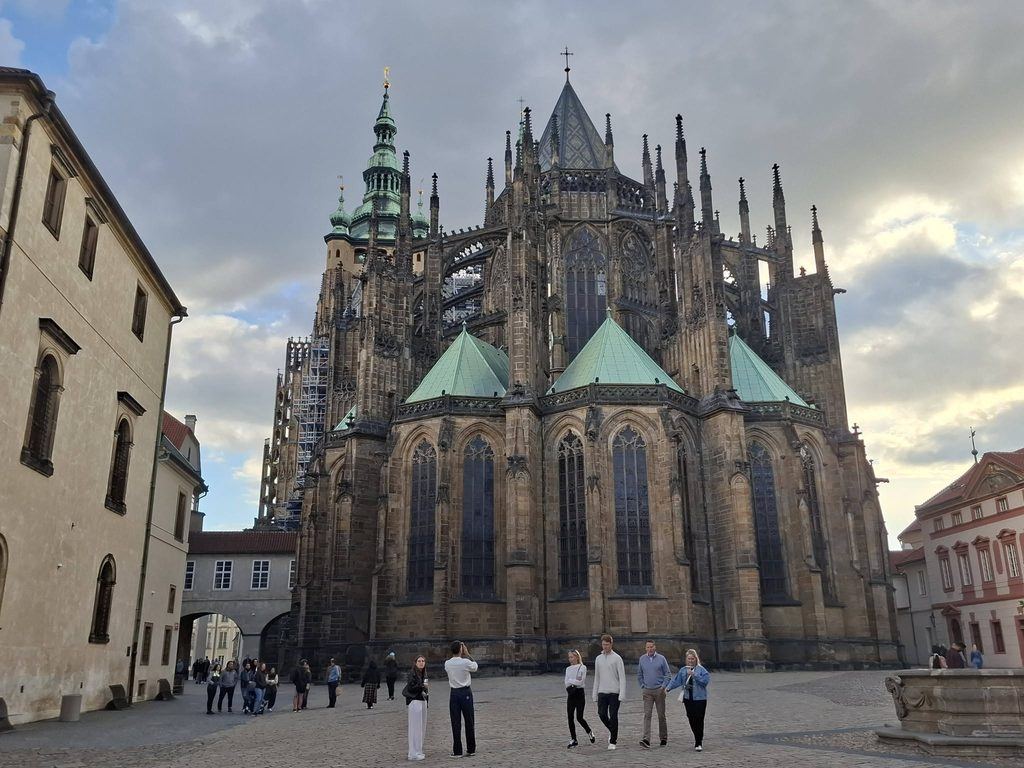
When you return to Nádraží Holešovice after visiting the zoo, Prague Castle isn’t too difficult to reach. You can take a tram towards Malostranské náměstí, with the journey taking roughly 20 minutes depending on the service.
You’ll still have a bit of a walk — and an uphill one at that — to reach the castle from there, but if you’ve still got the energy after walking around Prague Zoo, it’s definitely worth considering. I did this the last time I came to Prague and it was a great end to the day.
Personally, I’d probably recommend doing the zoo first and Prague Castle afterwards, particularly if seeing the animals is your priority. That way you can get to the zoo earlier in the day and take your time exploring before heading back towards central Prague.
Also, if you are leaving the Zoo later in the afternoon you may miss the chance to actually go Inside Prague Castle but even just a walk around here is well worth the walk up.
Or Take the Boat to Prague Zoo
Honestly, I never actually knew this was a thing till I worked on this blog post. The boat trips in Prague I absolutely love. In fact, last time I was here I even risked missing my flight back to London just so I could go on the 45 minute Prague to Venis boat trip.
This one I will be hoping to experience maybe next time I’m here. If you’re visiting Prague between spring and autumn and fancy making this journey part of the experience to get to Prague Zoo, then this is certainly something you have the option to do.
Here you travel towards the zoo by boat along the Vltava River.
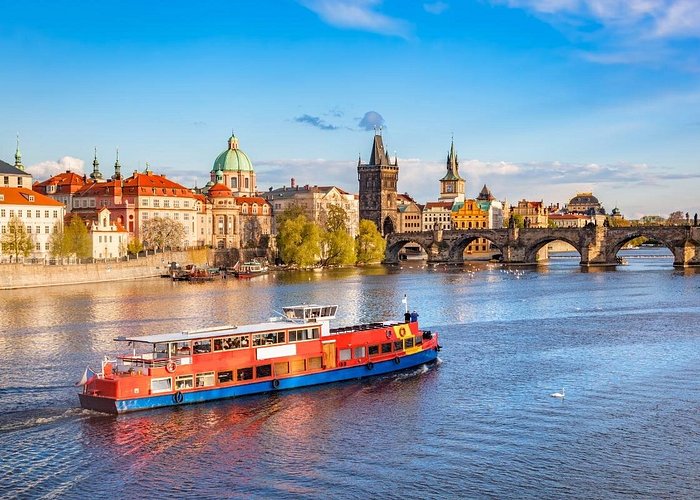
Obviously, this isn’t going to be the quickest way to get there, but if you’ve got plenty of time in Prague, it could be a much more memorable way of starting your day at the zoo.
The regular steamboat to Prague Zoo departs from Rašínovo nábřeží, on the Vltava in central Prague. The journey takes about 75 minutes and takes you to the boat landing on Císařský ostrov (Imperial Island). From there, you cross the pedestrian bridge into Troja and walk to Prague Zoo.
The zoo says the landing is roughly 1.1 km from the main entrance.
The service is seasonal, operating approximately April to October.
I’d recommend checking the official Prague Zoo website before travelling, particularly if you’re considering the boat. Public transport routes, seasonal services, opening hours and ticket prices can all change.
How Long Do You Need at Prague Zoo?
4-5 hours I’d say from personal experience is plenty of time to see most of the zoo, and actually to go back and see some of the animals you may have missed on the first walk around.
Although, I suppose this really depends on the individual. If you are visiting with Children or not the fittest person with mobility issues than you will likely need longer depending on what you want to see.
It is a big place though which is an Important thing to bear in mind.
Prague Zoo covers around 60 hectares and has approximately 10 kilometres of visitor routes.
You could rush around the main attractions in a few hours, but I don’t think that would really do it justice.
I’d suggest allowing at least half a day, and preferably most of the day if needs be.
Comfortable shoes are also highly recommended as the zoo is surprisingly hilly and almost mountain-like.
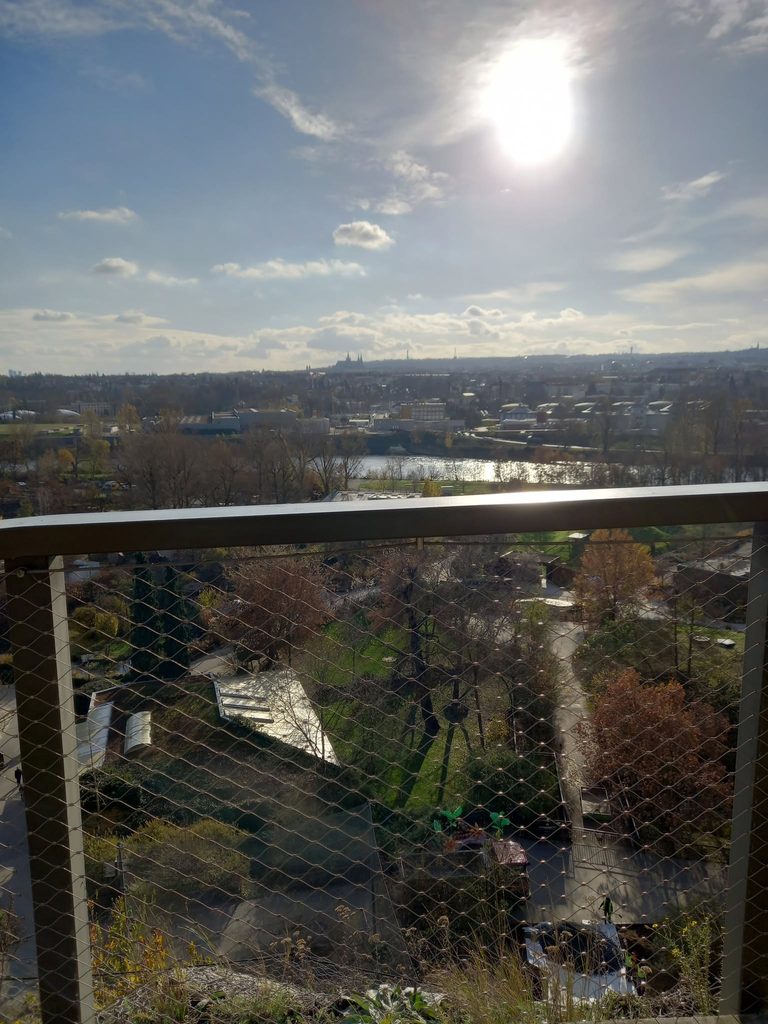
In fact, this is something other than the animals and birds here that make this place so Incredible. The views up the top of the zoo are truly amazing.
Just looking down at the river and the City in the distance its a nice little bonus to go with seeing all the animals and birds.
Where to Stay When Visiting Prague Zoo
If you’re visiting Prague for a few days, you don’t necessarily need to stay close to Prague Zoo. The zoo is located in the Troja district, and despite the distance it is away you can still get here from the City in typically less than an hour.
To really experience the magic of Prague you probably will find it more convenient to stay closer to the City Centre and travel to the zoo for the day by public transport.
Once you get used to the likes of the trams and the metro getting around the City is relatively straightforward. Although, definitely try to get an eSim sorted out with mobile data just to try and make sure you’re wasting the least time possible.
Looking for somewhere to stay?
🏨 [Browse Hotels and Places to Stay in Prague]
You can compare accommodation in Prague based on your dates, budget and preferred location before booking.
*Affiliate disclosure: I may earn a commission if you make a booking through my link, at no additional cost to you.
Would You Like To Buy Me a Coffee?

The content me and Teddy share on TeddybearsTravels.com is 100% free. From the stories and laughs to travel tips and recommendations, I don’t charge a single dime.
I may occasionally receive an affiliate commission (if I’m lucky), but otherwise, all the time I spend creating this content is just for the love. I enjoy doing it, honestly! and I hope you like reading this as much as I like writing it. If you do and you would like to support us it would be great if you could buy Me and Teddy a Coffee by using the link here <<
More From My Travels: Prague & Zoos In Europe
If you enjoyed reading about Prague Zoo, you might also like some of my other experiences from Prague and my travels around Europe:
- [Top 10 Tourist Attractions In Prague Czech Republic] — My experience exploring more of Prague and what I got up to during the trip.
- [Wroclaw and Prague In 5 Days] — More from my travels around this incredible part of Europe.
- [I Followed The Gremlins To Malta via Prague and Warsaw] – Travel blog Including my visit to Prague in June 2025]
- [9 European Countries In 11 Days] – Travel blog Including my December 2024 stop off In Prague.
- [The Best Zoos in Europe] — A look at some of my favourite European zoos I’ve visited on my travels.
FAQs About Prague Zoo
Is Prague Zoo Good for Families With Autistic Children?
Prague Zoo can certainly offer an enjoyable day out for families with autistic children, but whether it’s suitable will depend on the individual child’s needs and sensitivities.
One thing to consider is the sheer size of the zoo. There are around 10 kilometres of visitor routes, and popular areas can become busy. Indoor pavilions, animal talks and feeding sessions may also be more crowded or noisy.
If crowds or sensory overload are a concern, I’d personally consider visiting earlier in the day and avoiding particularly busy weekends and holidays where possible.
Because every child’s needs are different, I’d also recommend contacting Prague Zoo before visiting if you need information about specific accessibility or sensory requirements.
Also, something I feel Important to add – do not let your child (autistic or not) wander off in this zoo. It is a very big place and not somewhere you’d want to lose your child.
Is Prague Zoo Good for Toddlers?
Yes, Prague Zoo can be a great place to visit with toddlers, although I’d prepare for a long day and plenty of walking.
Children under three currently receive free admission, and Prague Zoo also allows strollers and has children’s carts available to borrow from the main entrance.
The biggest consideration is probably the zoo’s size and hilly terrain. If you’re visiting with a young child, I wouldn’t try to see absolutely everything. Pick the animals you most want to see, take regular breaks and allow plenty of time.
When Is Feeding Time at Prague Zoo?
There isn’t one single feeding time for Prague Zoo.
The zoo runs commented feedings and animal talks for different species, but the programme varies depending on the day, season and special events.
If there’s a particular animal you’d like to see being fed, I’d recommend checking Prague Zoo’s current events programme on the day of your visit rather than relying on an old timetable you find online.
This can also be a good way to improve your chances of seeing some of the more elusive animals when they’re active.
How Accessible Is Prague Zoo With a Wheelchair?
Wheelchairs are permitted throughout Prague Zoo, including mechanical and electric wheelchairs.
However, something you should be aware of is the terrain. Prague Zoo is built across a hillside, so some routes can involve significant slopes.
The zoo offers wheelchairs free of charge from the main entrance, subject to availability, and these can be reserved in advance. If wheelchair accessibility is important for your visit, I’d recommend checking the zoo map and planning your route beforehand rather than simply exploring at random.
What Are Prague Zoo’s Opening Hours?
Prague Zoo is open every day of the year from 9:00 am, but closing times vary according to the season.
During the shorter winter months it closes earlier, while during spring and summer it stays open considerably later.
Because the exact closing time depends on when you’re visiting — and entrance gates, ticket offices and individual pavilions can have their own closing times — I’d recommend checking the official Prague Zoo website shortly before your visit.
How Much Does Prague Zoo Cost for a Family?
At the time of writing, the standard family admission is 1,000 CZK at the ticket office or 850 CZK when purchased as an e-ticket.
The family ticket covers two adults and up to four children aged 3–15. Children under three receive free admission.
Prices can change, though, so I’d recommend checking the latest admission prices before travelling.
Or, if you plan to make a go of visiting Prague’s other many Tourist attractions as well as Prague Zoo then you can enter for free with a Prague visitor pass. (See full list here<<)
When Is the Best Time to Visit Prague Zoo?
For me, I’d recommend arriving earlier in the day, particularly if seeing as many animals as possible is your priority.
You’ll have more time to explore without rushing, and it gives you the opportunity to return later to animals that may have been hiding the first time around — something I’ve certainly had to do with the Tasmanian devils!
Spring and early autumn can also be particularly pleasant because you can avoid some of the hottest summer weather while still having plenty of daylight.
Weekdays will generally also be worth considering if you’d prefer to avoid the busiest family crowds.
How Much Time Do You Need at Prague Zoo?
I’d allow at least half a day, but personally I think Prague Zoo deserves most of a day if you’re genuinely interested in seeing the animals.
There are around 10 kilometres of visitor routes spread across a large, hilly site, plus numerous indoor pavilions and exhibits.
You could see the highlights in three or four hours, but you’d inevitably miss quite a lot. If Prague Zoo is one of the main attractions you want to visit during your trip, I’d give yourself five to six hours or more and explore it at a relaxed pace.
Final Thoughts: Is Prague Zoo Worth Visiting?
If you’re already visiting Prague and have even a passing interest in wildlife, I’d definitely consider making room for the zoo in your itinerary. The Beavers (Nutria) on the river banks of the Vitava River are also pretty cool but coming to the Zoo is a great day out.
Seeing animals such as the Tasmanian devil, Chinese pangolin, Pesquet’s parrot and Przewalski’s horse makes the experience feel quite different from visiting a typical zoo.
There is also a serious conservation story running throughout the place.
For me, this is what makes Prague Zoo in the Czech Republic much more than another tourist attraction.
Is it the best zoo in Europe?
I’ll leave that one open to debate.
But after seeing what is on the Prague Zoo animal list, I can certainly understand why it has earned such a strong reputation.
Have you visited Prague Zoo? Which animal was your favourite? Let me know in the comments below.



Agadir Algeciras Armenia Czech Republic Estonia Europe Fes Fez Fuerteventura Georgia Gibraltar Italy La Linea Lanzarote Malaga Malta Marrakech milan Morocco Nessebar North Africa Oasis Wildlife Park Ouzoud Poland Prague Prague travel tips Prague Zoo guide Rome Salerno Saranda Spain Sunny Beach Tallinn Tangier Tarifa Tartu Tbilisi The Balkans The Canary Islands Tunisia visiting Prague Zoo wild animals wildlife tourism Yugoslavia zoo travel guide

Keen traveller and digital nomad looking to share my stories from my international trips with my faithful companion Mr Bean 2.0 (Alex Chivers).